

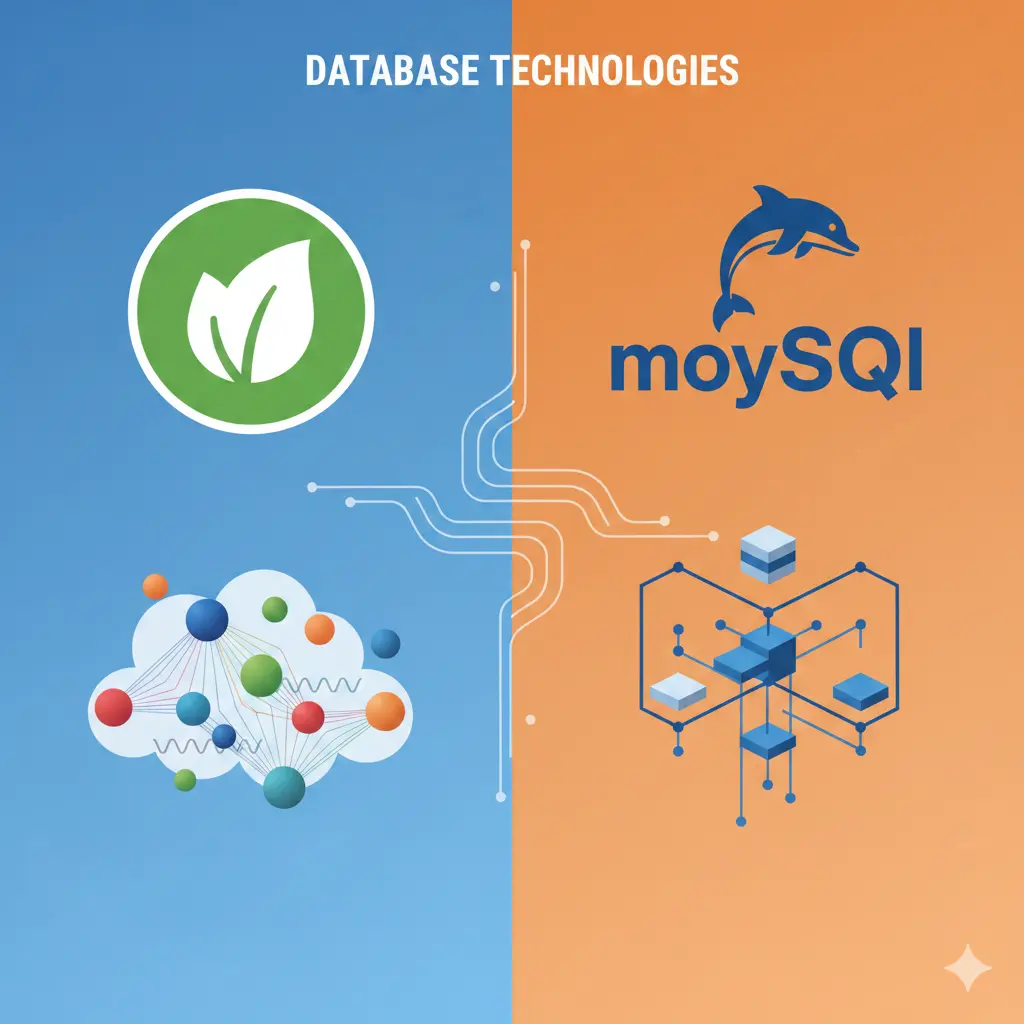
Why MongoDB Is Better Than MySQL for Modern Applications
Choosing the right database is one of the most important decisions when building a modern application. The database you choose directly impacts performance, scalability, development speed, and long-term maintenance. For many years, MySQL has been the default choice for websites and backend systems. It is stable, reliable, and widely supported.
However, as applications become more dynamic, data structures grow more complex, and businesses demand faster development cycles, many developers are moving toward NoSQL databases such as MongoDB. MongoDB offers flexibility, scalability, and performance advantages that make it better suited for modern application development.
In this article, we explore in detail why MongoDB is better than MySQL for many real-world use cases and when choosing MongoDB can significantly improve your development experience.
Understanding MySQL and MongoDB
What is MySQL?
MySQL is a relational database management system (RDBMS) that stores data in tables using rows and columns. Each table follows a predefined schema that defines the structure of the data. Relationships between tables are created using foreign keys and joins.
What is MongoDB?
MongoDB is a NoSQL, document-oriented database that stores data in JSON-like documents. Instead of tables, MongoDB uses collections. Each document can have its own structure, allowing greater flexibility when storing data.
1. Flexible Schema Makes Development Faster
One of the biggest advantages of MongoDB over MySQL is its flexible schema. In MySQL, you must define table structure before storing data. If your application changes, you need database migrations.
MongoDB allows you to store documents without defining a fixed schema. You can add new fields anytime without modifying existing data.
This flexibility is ideal for startups and fast-moving projects where requirements change frequently. Developers spend less time managing schema changes and more time building features.
2. Better for Unstructured and Semi-Structured Data
Modern applications often store data that does not fit neatly into rows and columns:
- User profiles
- Chat messages
- Logs
- Social media data
- IoT sensor readings
MongoDB stores such data naturally as documents. Related information can be embedded inside a single document, avoiding multiple tables and joins.
This makes MongoDB more efficient and easier to work with when handling complex or evolving data structures.
3. JSON-Based Storage Matches Modern Development
Most modern applications already use JSON for communication between frontend and backend. MongoDB stores data in BSON (Binary JSON), which closely matches JSON structure.
This means data received from APIs can be stored directly without heavy transformation. MySQL often requires object-relational mapping, which increases complexity.
MongoDB reduces friction between application code and database.
4. Horizontal Scalability Out of the Box
Scaling MySQL typically requires vertical scaling (bigger servers) or complex sharding setups. MongoDB was designed with horizontal scaling in mind.
MongoDB supports automatic sharding, allowing data to be distributed across multiple servers. As traffic grows, you can simply add more nodes.
This makes MongoDB a strong choice for high-traffic applications.
5. High Performance for Large Workloads
MongoDB is optimized for high read and write throughput. Since related data can be stored together, many queries require only a single database call.
MySQL often needs joins across multiple tables, which increases query time.
For applications dealing with large volumes of data or real-time interactions, MongoDB usually provides better performance.
6. Easier Handling of Complex Relationships
MongoDB supports embedding related data inside documents. This simplifies one-to-many and many-to-many relationships.
Instead of managing multiple tables and joins, MongoDB allows developers to store everything in a structured document format.
This results in cleaner code and simpler queries.
7. Built-In High Availability
MongoDB uses replica sets for high availability. Data is automatically replicated across multiple servers.
If one server fails, MongoDB automatically elects a new primary server without downtime.
MySQL requires additional configuration and tools to achieve similar reliability.
8. Better for Microservices Architecture
Modern applications often use microservices, where each service manages its own database.
MongoDB’s flexible schema allows each service to store data in its own format without being constrained by a global schema.
This makes MongoDB ideal for microservices-based systems.
9. Faster Iteration and Prototyping
With MongoDB, developers can start storing data immediately without designing schemas.
This speeds up prototyping and allows teams to test ideas quickly.
Startups benefit greatly from this agility.
10. Strong Ecosystem and Cloud Support
MongoDB offers cloud-native services like MongoDB Atlas, which provides automatic backups, scaling, monitoring, and security.
Developers can deploy production-ready databases in minutes.
While MySQL also has cloud support, MongoDB’s tooling is often more developer-friendly.
11. When MySQL May Be Better
Despite MongoDB’s advantages, MySQL is still a good choice for:
- Financial systems requiring strict transactions
- Complex relational data
- Legacy systems
- Applications needing heavy SQL reporting
Choosing the right database depends on your use case.
MongoDB vs MySQL Comparison
| Feature | MongoDB | MySQL |
|---|---|---|
| Schema | Flexible | Fixed |
| Scaling | Horizontal | Mainly Vertical |
| Data Format | JSON Documents | Tables |
| Joins | Not Required | Required |
| Best For | Modern Apps | Traditional Apps |
Conclusion
MongoDB is better than MySQL for many modern applications because it offers flexible schemas, better scalability, high performance, and faster development cycles.
For projects that require rapid iteration, handle large volumes of unstructured data, or operate at scale, MongoDB provides significant advantages.
While MySQL remains a strong choice for relational workloads, MongoDB is often the better option for building future-ready applications.








All Rights Reserved © 2026